Introduction
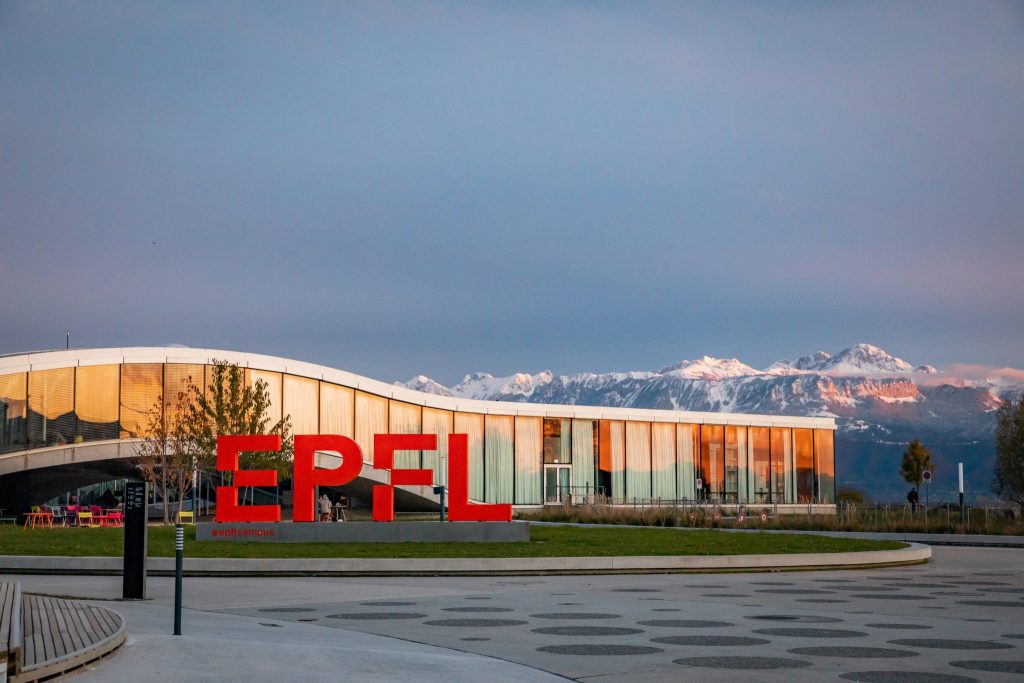
Hosting over 500 laboratories, the Swiss Federal Institute of Technology in Lausanne (EPFL) is a central institution in the technology and innovation landscape of Western Switzerland. Since 2022, the EPFL School of Life Sciences (SV) has integrated PPMS as a tool to simplify and coordinate the operations of its research and infrastructure facilities, enabling the delivery of high-quality services to the EPFL community.
In this document, we outline three domains in which PPMS has empowered technical staff, laboratories and core facility teams, bringing a positive impact to internal operations:
Compliance with funding agency requirements: supporting eligible cost reporting for internal EPFL laboratories.
Financial integration: reducing administrative overhead associated with routine invoicing for internal and external core facility partners.
LIMS integration: simplifying cross-platform workflows through PPMS APIs.
Background
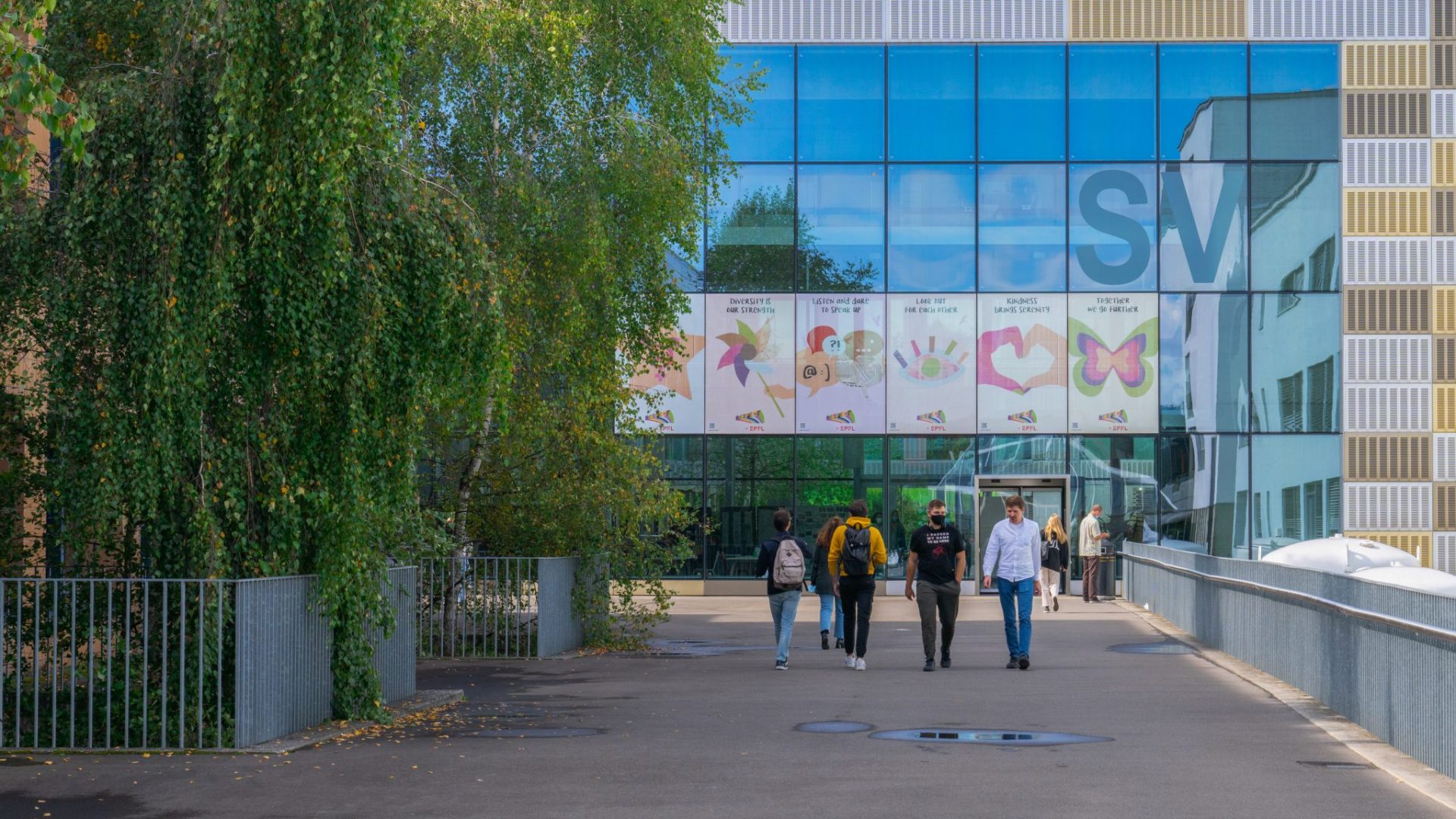
EPFL's School of Life Sciences (SV) was established following EPFL's strategic expansion into the life sciences in the early 2000s and has grown into one of Europe's leading interdisciplinary research schools. Located on EPFL's campus alongside Lake Geneva in Lausanne, Switzerland, SV is uniquely positioned to foster collaborations across EPFL's broader research ecosystem, as well as with regional academic and clinical partners across Western Switzerland.
SV comprises more than 50 pioneering faculty-led research laboratories, grouped across five institutes. Research groups operate at the interface of biology, basic sciences, computer science and engineering, with cutting-edge core facilities and infrastructure supporting scientists across disciplines including neuroscience, immunology, cancer research, infectious diseases and bioengineering.
The School's research core facilities operate under a shared umbrella, providing services and access to state-of-the-art equipment to support a broad range of scientific projects. EPFL core facilities serve approximately 5,000 users and provide access to more than 700 scientific instruments and assets, as well as 400 scientific services.
Domains of EPFL Core Facilities integrating PPMS
Bioengineering & Organoids Technology
Bioimaging & Optics
Biomolecular Screening
CryoEM
Environmental Analytic Chemistry
Gene Expression
Gene Therapy & Vector Production
Histology
Phenogenomics
Protein Production & Structure
Molecular and Hybrid Materials Characterization
Stem Cell and Organoid Laboratory
As its internally developed booking and core facility management tools became obsolete and increasingly difficult to maintain, the EPFL School of Life Sciences initiated the procurement of a new core facility management solution between 2020 and 2021.
Stratocore PPMS addressed the challenges and limitations of the previous internally developed solution by providing a centralised data infrastructure capable of capturing and storing comprehensive operational data across all core facilities included in the project. Its built-in reporting engine enabled the automated generation of customised performance reports and real-time monitoring of facility activity, reducing the need for manual, time-consuming reporting processes.
Compliance with funding agency requirements
As one of the main funding partners of EPFL research laboratories, the Swiss National Science Foundation (SNSF) sets rigorous requirements and procedures for the reimbursement of research costs associated with core research facility services. The SNSF also defines rules governing the eligibility of research costs for reimbursement according to the institutional accreditation of core facility user groups and the cost models applied to core facility equipment and services.
Through PPMS functionality such as highly customisable pricing rules, tags and custom fields, EPFL can adapt service pricing to changing operational costs and user categories. This has enabled the School of Life Sciences to maintain SNSF-compliant dynamic pricing for services despite evolving core facility operational costs and user groups.
In addition, internal users of EPFL core facilities using PPMS are provided with pre-filled documents for reimbursement tracking, reducing administrative overhead.
Financial Integration
A key factor in the success of PPMS at the EPFL School of Life Sciences was its software integration with EPFL's internal authentication and financial systems. The EPFL community comprises approximately 15,000 members, ranging from students to research staff, technical employees and faculty, alongside a substantial external user base affiliated with partner academic institutions and industry.
The administrative work required to maintain invoicing information, user rights and accreditation status across this large user base was therefore a central topic of discussion during the initial testing and deployment phase within SV.
The Stratocore Client Relationship and Support teams were instrumental in supporting the integration of data from EPFL's internal ERP systems into PPMS. For core facility managers, this resulted in a standardised process for onboarding new external partner laboratories, institutions and companies. Internal research and laboratory staff also benefited from a single point of access for services, orders and system bookings, without additional user account administration overhead.
Following the initial implementation, billing processes are largely automated and require minimal manual intervention, primarily for quality control, report generation and validation. Ongoing process improvements are supported by the high availability of the Stratocore support team.
LIMS Integration
As part of its software offering to support academic and research excellence, the EPFL School of Life Sciences provides the EPFL community with an industrial-grade, highly customisable solution for Electronic Laboratory Notebooks (ELNs) and Laboratory Information Management Systems (LIMS).
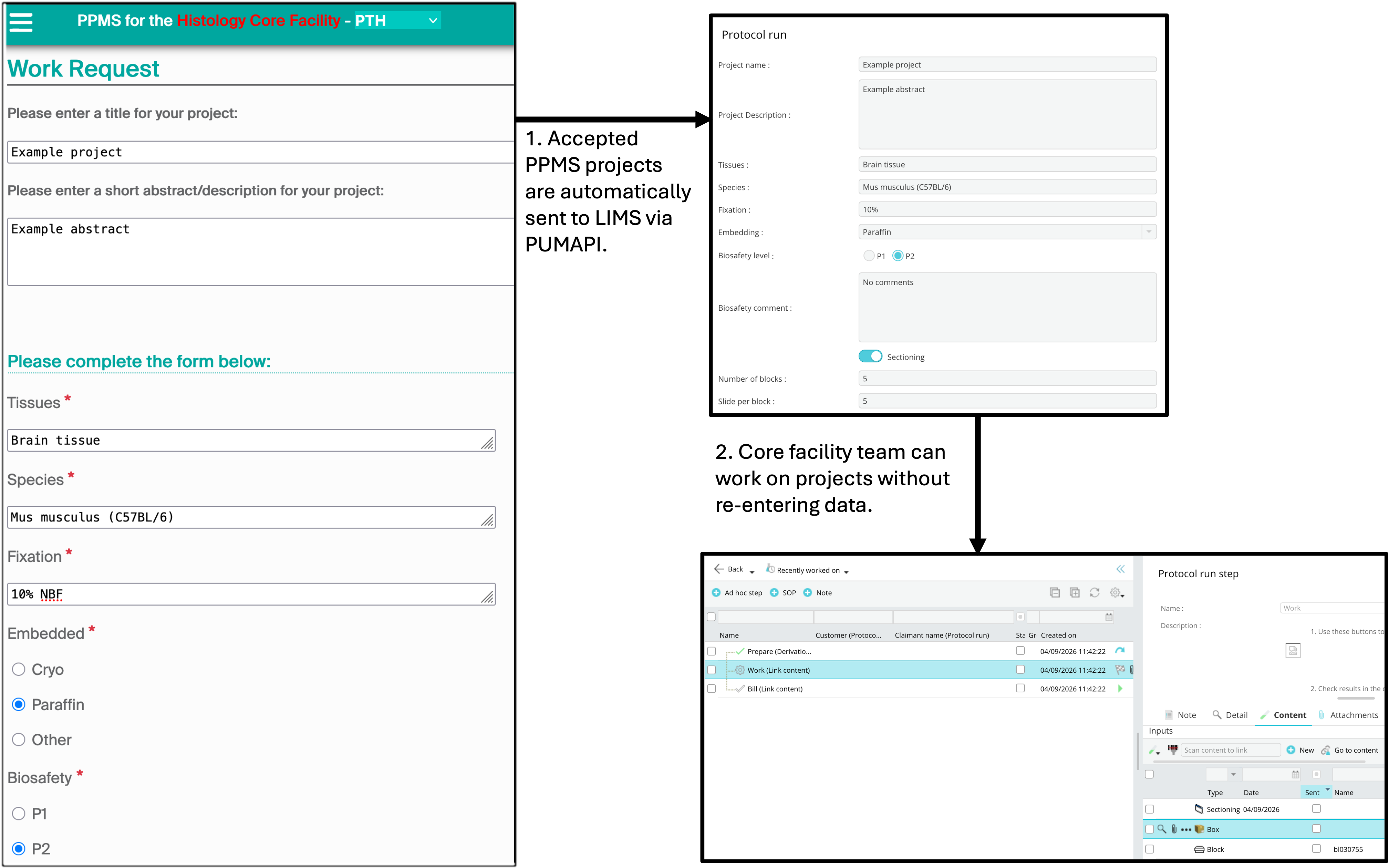
For research facilities specialising in the production, procurement and delivery of highly specialised consumables and services, the integration of PPMS Work Requests and Orders with LIMS-specific internal workflows was essential.
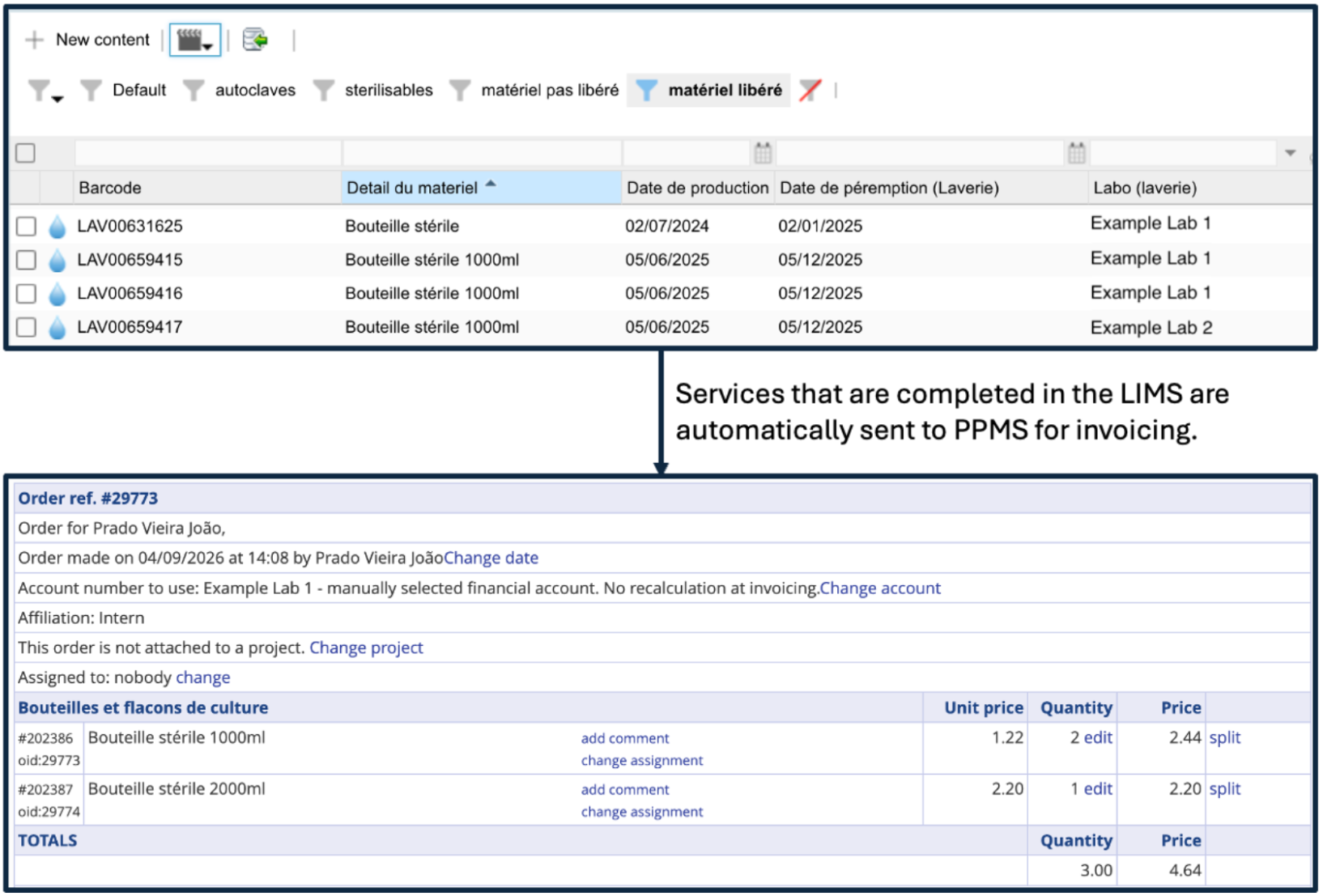
The PPMS PUMAPI and API2 provide a powerful interface for the automated synchronisation of data between PPMS and EPFL's internal LIMS solutions. These APIs allow PPMS to securely exchange data with other systems across EPFL’s research ecosystem. Together, the two APIs provide reliable support for different workflow needs, ranging from the instant synchronisation of completed PPMS user forms to the daily or monthly synchronisation of delivered consumables and completed PPMS orders.
Looking Ahead
The integration of PPMS within the EPFL School of Life Sciences has been positively received by research facilities across SV and other EPFL Schools. Following the initial project implementation, core facilities from Materials Science and Environmental Engineering departments have been successfully integrated into the EPFL SV PPMS instance.
Stratocore PPMS has proven to be a reliable and robust tool for enabling the digitalisation and simplification of internal processes as needs and operational requirements evolve. In particular, the Statistics, Forms and Asset Catalogue PPMS modules, which had recently been reworked and developed at the time of writing, are seen as positive additions to the PPMS user experience.
The continuous development and future roadmap of the platform demonstrate an ongoing commitment to listening to the needs of core facilities. As EPFL's research community continues to grow and evolve, Stratocore remains a trusted partner in supporting the operational excellence of its core facilities.
For more information about this case study, or to learn more about the PPMS implementation process, please get in touch with us.